Revision technique
How Is Cambridge IGCSE Physics 0625 Assessed?
Avenlo Editorial · Published 15 September 2026 · 7 min read
Cambridge IGCSE Physics 0625 is assessed through three externally assessed papers: multiple choice, theory, and a practical assessment. Their weightings are 30%, 50% and 20%, respectively. Students follow either the Core or Extended route and take either the Practical Test or Alternative to Practical.
This guide covers the 2026–2028 syllabus. Cambridge identifies syllabuses by the year of examination, rather than the year teaching begins, so check the document matching your exam year.
Which papers do Core and Extended students take?
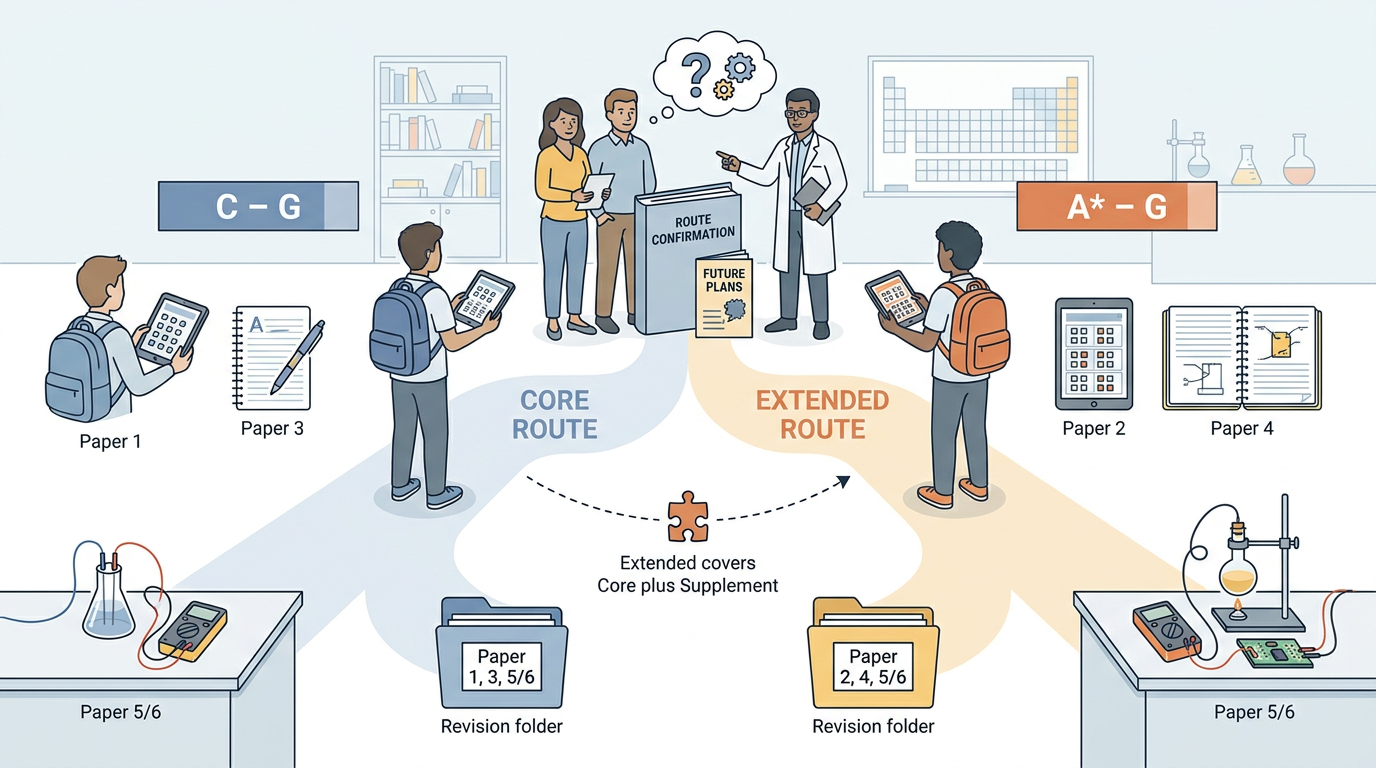
| Route | Multiple choice | Theory | Practical assessment | Available grades |
|---|---|---|---|---|
| Core | Paper 1 | Paper 3 | Paper 5 or 6 | C–G |
| Extended | Paper 2 | Paper 4 | Paper 5 or 6 | A*–G |
Extended covers Core plus Supplement content.
Ask your teacher to confirm your route before organising revision. Put your paper numbers at the front of your revision folder and use them when selecting practice materials. This avoids spending a study session on a paper that does not match your entry.
For parents, a useful conversation is not simply, “Which route sounds harder?” Instead, ask which route best matches the student's understanding, recent work and future study plans. Make the decision with the school rather than relying on a single practice score.
How long are the papers?
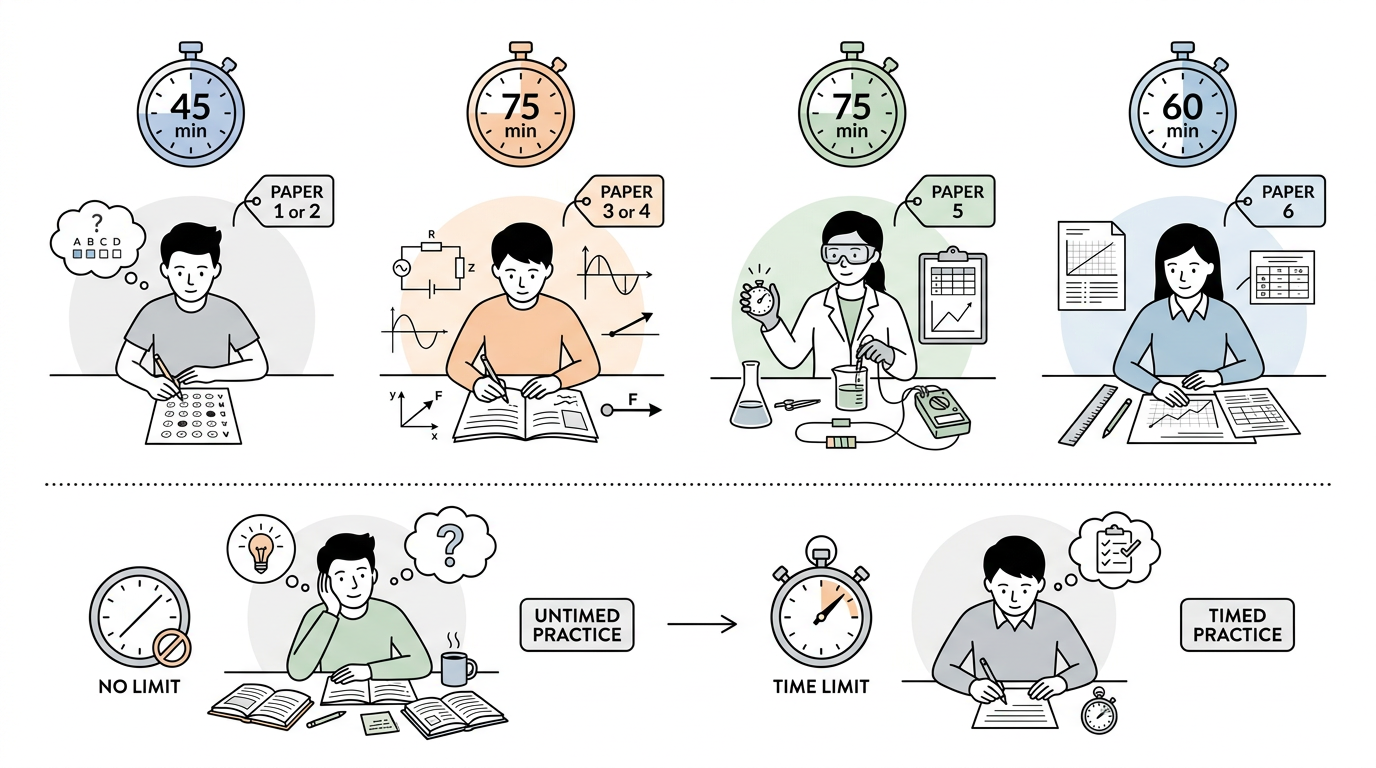
| Paper | Duration | Marks |
|---|---|---|
| 1 or 2: Multiple Choice | 45 minutes | 40 |
| 3 or 4: Theory | 75 minutes | 80 |
| 5: Practical Test | 75 minutes | 40 |
| 6: Alternative to Practical | 60 minutes | 40 |
Multiple-choice papers contain 40 four-option questions; theory papers contain short-answer and structured questions.
Use these timings when you move from topic practice to complete papers. At first, work without a strict time limit so that you can identify gaps in understanding. Later, practise finishing within the relevant duration, including time to check your answers.
Keep the two types of practice separate in your records. An untimed attempt with notes is useful learning, but do not treat its score as directly comparable with a timed attempt completed independently.
How should you prepare for multiple choice?
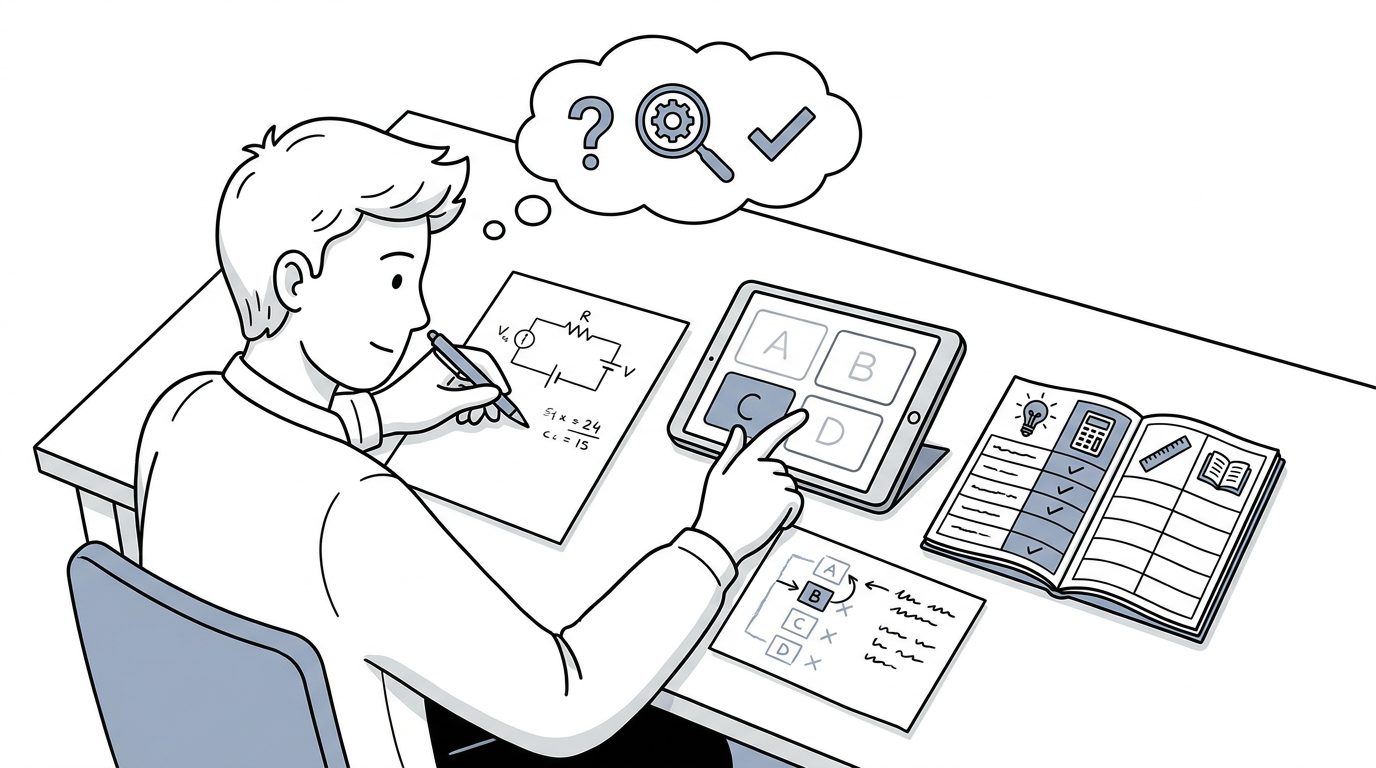
Treat multiple-choice practice as a reasoning exercise, not just a way to collect correct letters.
Try this routine:
- Read the question before looking closely at the options.
- Identify the quantity, relationship or physical idea involved.
- Make a brief calculation or sketch where useful.
- Compare your reasoning with each option.
- Check units, directions and any qualifying words before choosing.
When reviewing, explain why your chosen answer works. For difficult questions, also explain why the alternatives do not. If you selected the correct answer by guessing, flag it for revision rather than recording it as secure understanding.
Keep a short error log with categories such as concept, calculation, units and reading. After several practice sessions, choose your next revision task from the category that appears most often.
For example, if repeated errors involve converting quantities, practise conversions separately before attempting another full question set. This gives your revision a specific purpose rather than simply increasing the number of questions completed.
How should you prepare for theory?
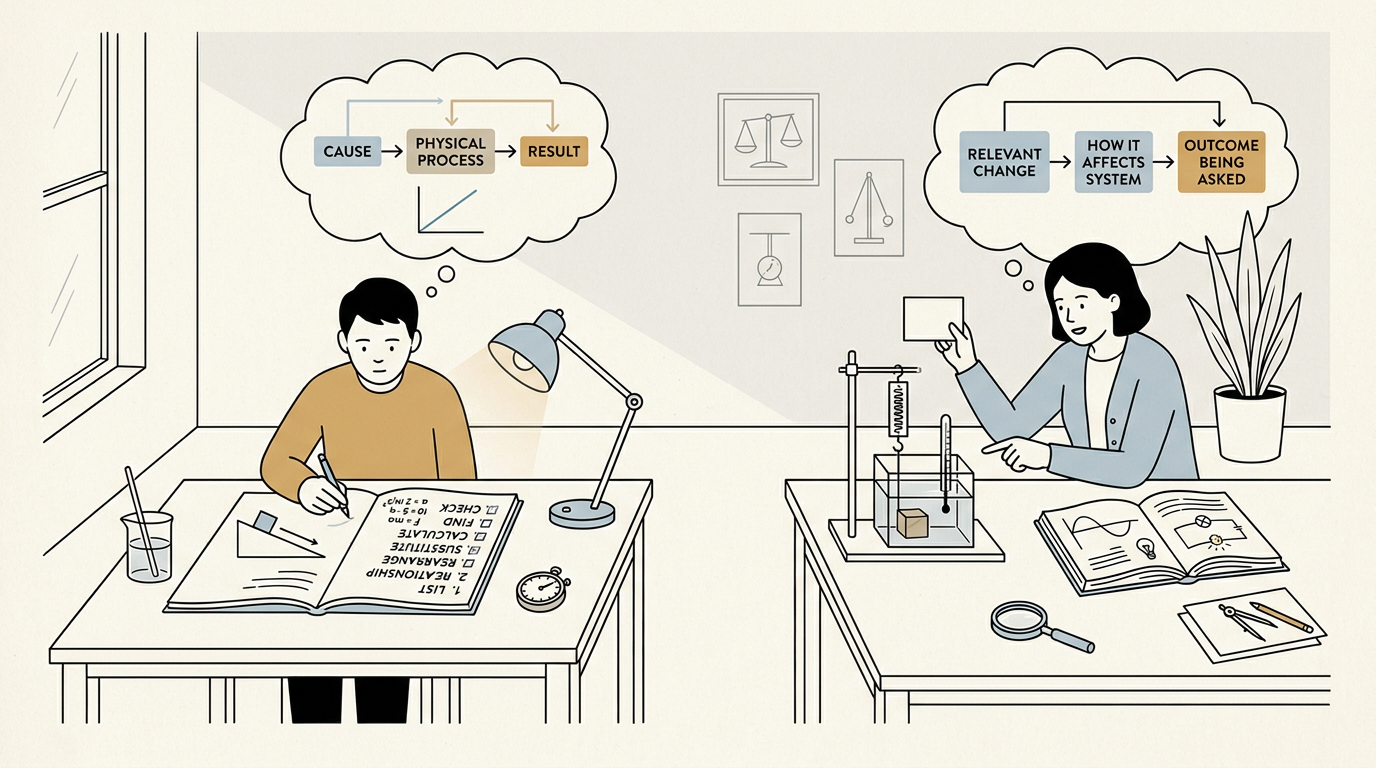
Use theory practice to develop clear explanations as well as accurate calculations. Aim to make your thinking easy to follow, without writing everything you know about the topic.
Build a consistent calculation method
For numerical questions, practise the following sequence:
- List the relevant information.
- Identify what you need to find.
- Select a suitable relationship.
- Rearrange it if necessary.
- Substitute values using compatible units.
- Calculate and check whether the result is reasonable.
Write down the important stages rather than keeping the entire calculation in your head. This also makes it easier to diagnose errors afterwards: you can distinguish an incorrect physical relationship from a simple arithmetic slip.
During review, redo the calculation from a blank page. Merely reading the worked solution can leave you unsure whether you could reproduce the method independently.
Make explanations specific
A useful practice structure is cause → physical process → result. Start with the relevant change, explain how it affects the system, and connect that explanation to the outcome being asked about.
Avoid vague references such as “it increases” when several quantities are involved. Name the quantity and make the connection explicit.
When checking your work, ask:
- Did I answer the actual question?
- Did I give a reason rather than repeat the observation?
- Have I used physical terms precisely?
- Is any sentence unnecessary or contradictory?
Use these questions as a self-editing checklist, not as a substitute for the mark scheme accompanying your practice paper.
What is the difference between Paper 5 and Paper 6?
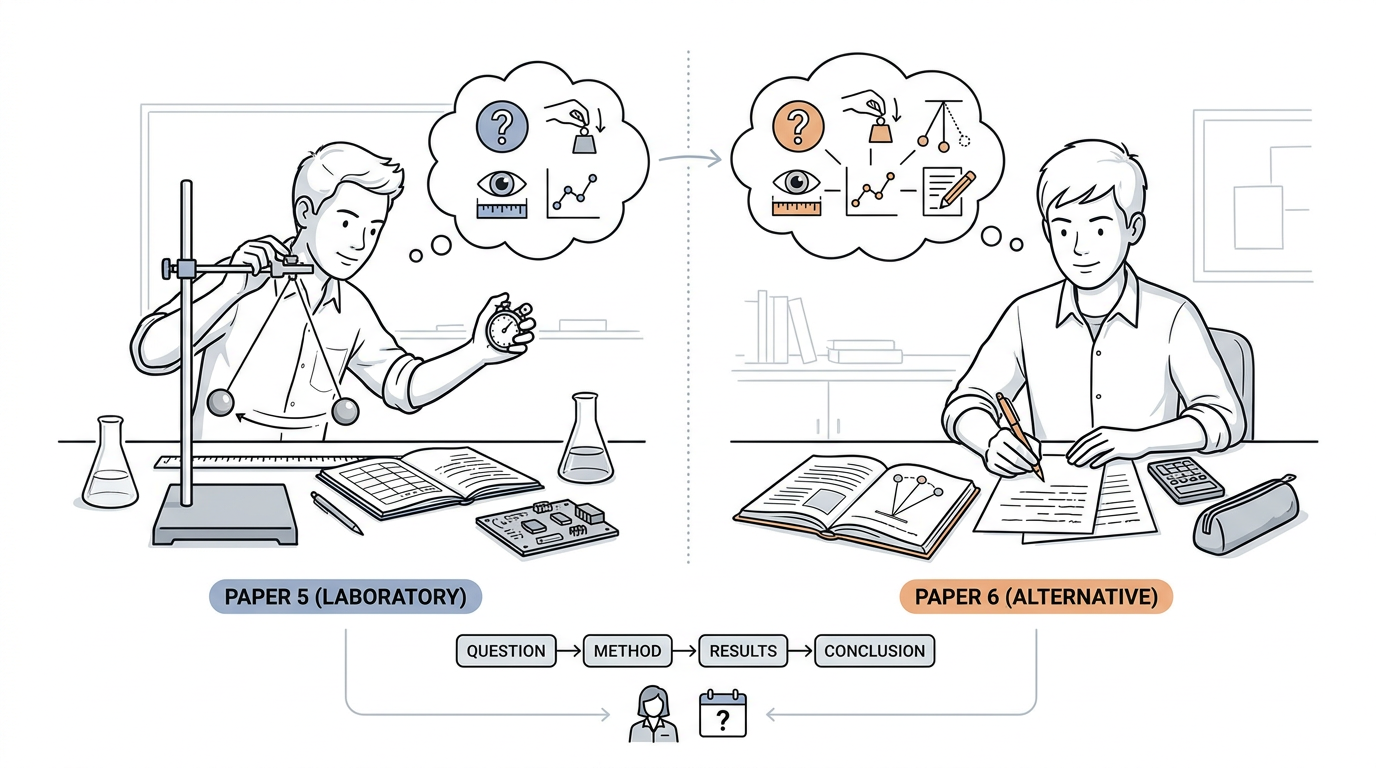
Paper 5 involves laboratory experiments during the test; Paper 6 does not. Both assess the same experimental skills and contexts.
Ask your school which practical assessment you are entered for. Do not assume that the word “alternative” means you should leave practical preparation out of your revision plan.
For either route, try organising your practical revision around a complete investigation rather than memorising disconnected phrases. Use a classroom experiment you have already studied and work through these questions:
- What question was being investigated?
- What was deliberately changed?
- What was measured?
- What needed to stay the same?
- How were the results recorded?
- What conclusion did the evidence support?
- What limitation affected the method?
- What specific improvement would address that limitation?
For Paper 5 preparation, ask your teacher for supervised opportunities to practise any apparatus or measurement procedure that feels unfamiliar. For Paper 6 preparation, practise explaining those procedures clearly on paper as well.
Practise meaningful evaluation
Avoid using “repeat the experiment” as your automatic answer to every evaluation question. Instead, identify the particular problem and explain what your proposed change would achieve.
As a revision exercise, take one completed investigation and write two columns: “possible limitation” and “targeted improvement”. Then check with your teacher whether each improvement actually addresses the limitation you identified.
Similarly, practise presenting results clearly. Review table headings, units, graph scales and plotted points. When describing a trend, refer to the quantities involved rather than writing only that a line goes up or down.
These are suggested study routines, not predictions of the experiments or questions in a future paper.
How should you use past papers and mark schemes?
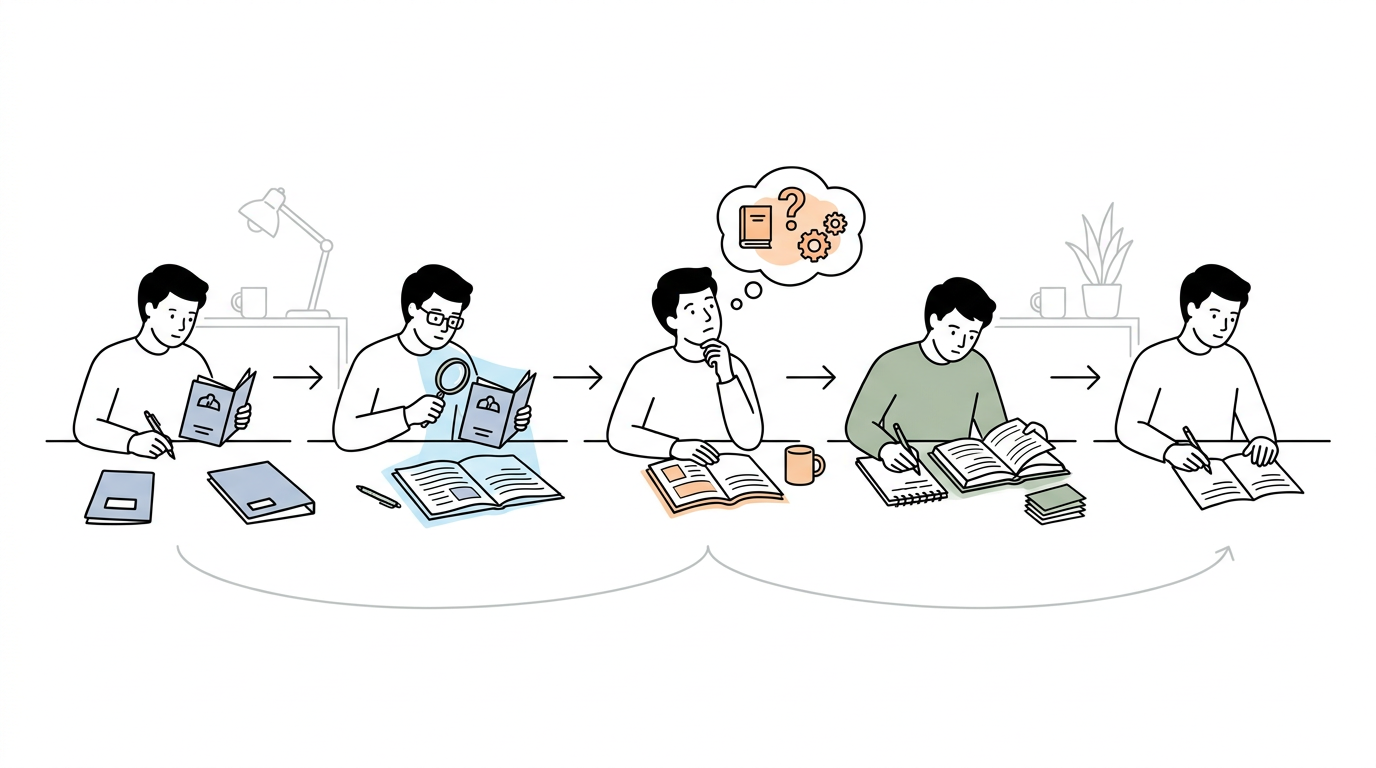
Cambridge explains that past papers help students become familiar with examination requirements and command words, while mark schemes show how answers meet assessment objectives.
Use them as a feedback cycle:
- Attempt: answer independently before opening the mark scheme.
- Check: compare the substance of your response, not just individual words.
- Diagnose: identify whether the problem was knowledge, interpretation, method or expression.
- Repair: revise the relevant idea or practise the missing skill.
- Retest: attempt a similar question later without support.
Avoid copying a model answer and immediately counting the topic as mastered. Close the solution and explain the reasoning aloud or reproduce the answer from memory after a break.
Ask your teacher which older papers remain suitable for your syllabus. Use current requirements as the reference point rather than assuming that every question in any available paper belongs in your revision programme.
What should students and parents check before exams?
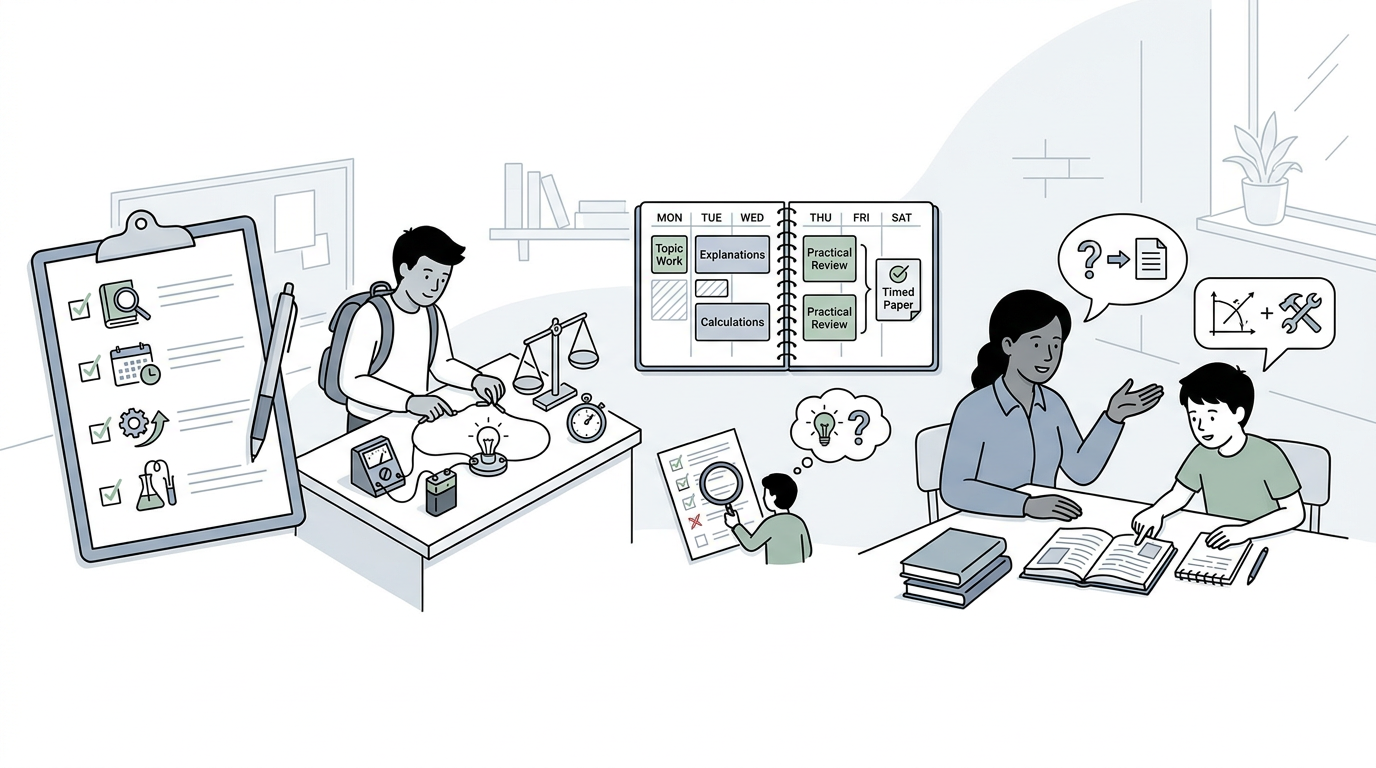
Create a one-page assessment checklist containing:
- Qualification name and syllabus code.
- Examination year and relevant syllabus document.
- Confirmed Core or Extended entry.
- Confirmed practical assessment.
- Paper dates, reporting arrangements and permitted equipment, checked with the school.
- A short list of the student's most important remaining revision priorities.
For weekly planning, combine targeted topic work, written explanations, calculations and practical-skills review. Use complete timed papers periodically to check how these skills come together.
Parents can help by asking, “What did you learn from reviewing that paper?” rather than focusing only on the percentage. Encourage the student to name one recurring difficulty and one concrete action for addressing it.
Summary
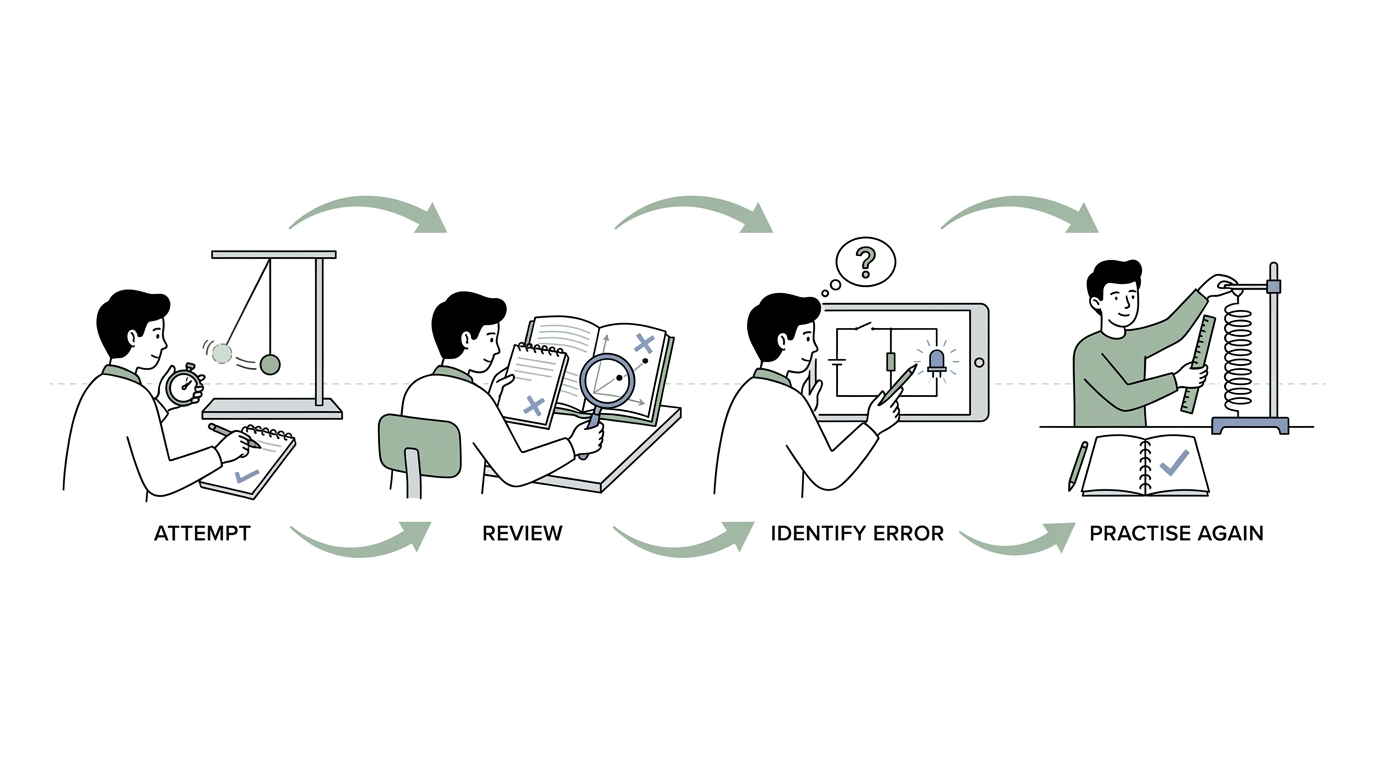
Start by confirming your assessment route and paper numbers. Use the timing table to plan realistic practice, then prepare deliberately for each format. The most useful revision cycle is to attempt, review, identify the cause of an error and practise again. Keep practical preparation alongside theory, and use your school and the relevant Cambridge syllabus to confirm examination arrangements.
Sources
- Cambridge IGCSE Physics 0625 syllabus for examination in 2026, 2027 and 2028 — Three-paper structure, external assessment, weightings, route combinations, grade ranges, durations, marks, question formats and the distinction between Papers 5 and 6.
- Cambridge IGCSE Physics (0625) — Availability of the 2026–2028 syllabus and the rule that syllabus years refer to the year of examination.
- Learning and revision — The educational purposes of past papers and mark schemes in understanding examination requirements, command words and assessment objectives.