Revision technique
CIE IGCSE Physics 0625: 30-Day Revision Plan for Oct/Nov 2026
Avenlo Editorial · Published 22 September 2026 · 8 min read
For CIE IGCSE Physics 0625 in October/November 2026, use a 30-day revision cycle: diagnose weaknesses, repair topic knowledge, practise Papers 2, 4 and 6, then reduce the workload before each exam. Make corrections and retesting part of every practice session—not an optional extra after completing a paper.
This is a suggested study plan, not an official Cambridge timetable. Count backwards from your first Physics examination using the dates confirmed by your school or examination centre. If fewer than 30 days remain, combine topic-review sessions rather than sacrificing marking or sleep.
What should you prepare for Papers 2, 4 and 6?
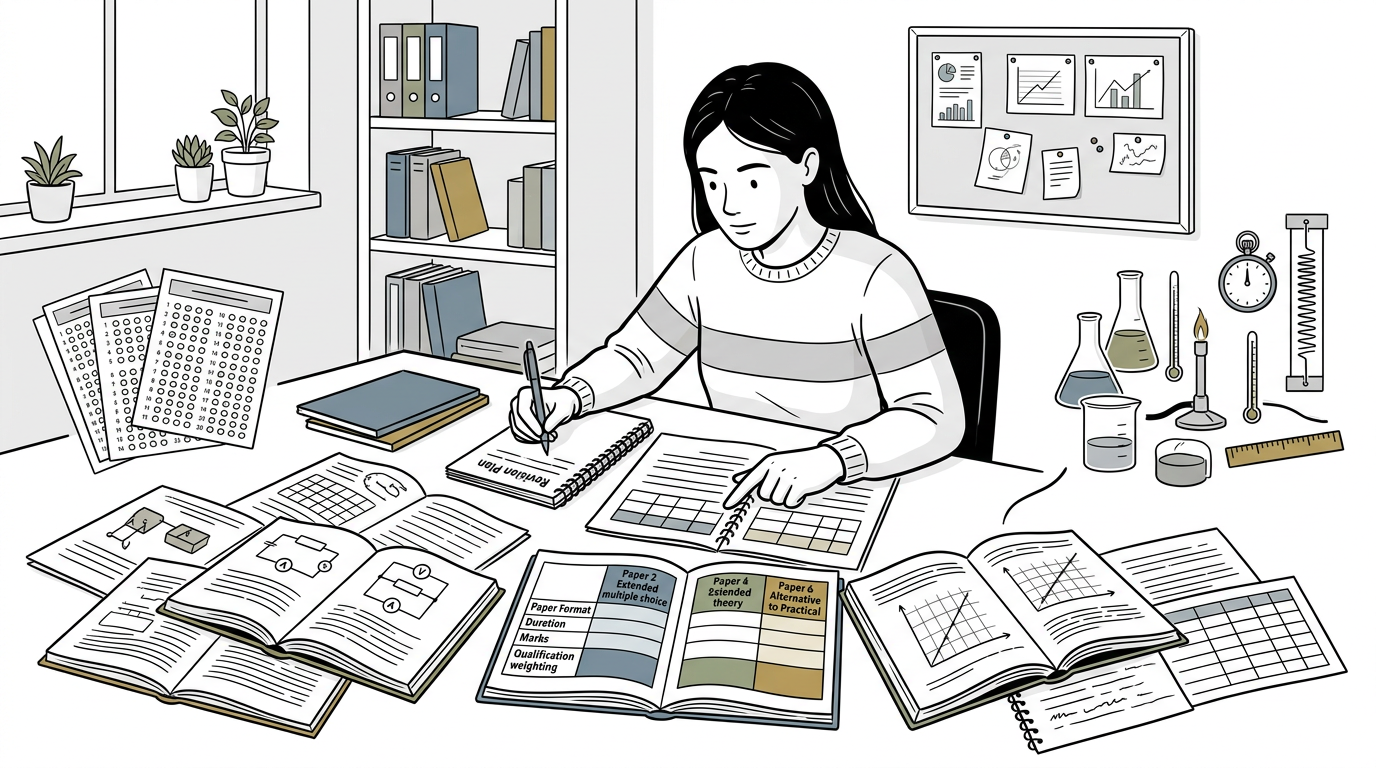
“This plan is for students taking the Extended route (Papers 2 and 4) who are entered for Paper 6 Alternative to Practical. Extended candidates may instead take Paper 5 Practical Test, so confirm your entry before starting.”
| Paper | Format | Duration | Marks | Qualification weighting |
|---|---|---|---|---|
| Paper 2 | Extended multiple choice: 40 four-option questions | 45 minutes | 40 | 30% |
| Paper 4 | Extended theory: short-answer and structured questions | 1 hour 15 minutes | 80 | 50% |
| Paper 6 | Alternative to Practical | 1 hour | 40 | 20% |
Papers 2 and 4 cover Core and Supplement content. Paper 6 assesses experimental skills without requiring you to perform experiments during the examination.
Give Paper 4 the largest share of practice time, but keep all three papers in your weekly routine. Adjust this balance after your diagnostic work: a persistent weakness in practical reasoning deserves attention even if theory feels more urgent.
How should a daily revision session work?
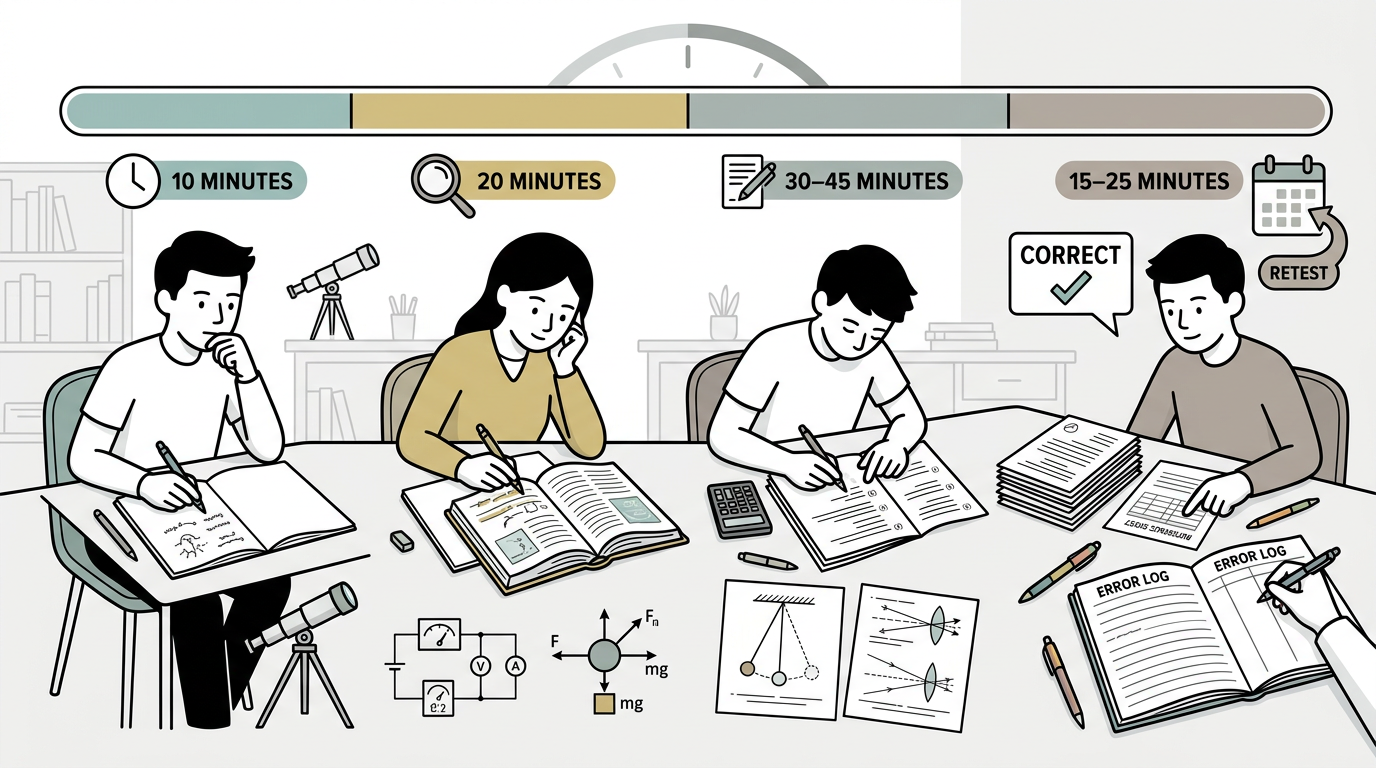
Aim for a manageable 75–100 minutes of Physics on most study days, adjusted around other subjects. Full-paper days may need a separate marking session. This is a suggested workload, not a requirement.
Use four stages:
- Recall for 10 minutes: write equations, definitions or diagrams from memory.
- Repair for 20 minutes: check one weak concept using your notes or textbook.
- Practise for 30–45 minutes: answer questions without notes.
- Correct for 15–25 minutes: mark, explain errors and schedule a retest.
Keep one error log with columns for the question reference, mistake, correction and retest date. Record the cause, not just the answer: “used diameter instead of radius” is more useful than “calculation wrong”.
On a busy day, shorten the question set. Avoid replacing active practice with an hour of highlighting.
Days 1–7: Diagnose weaknesses and rebuild mechanics
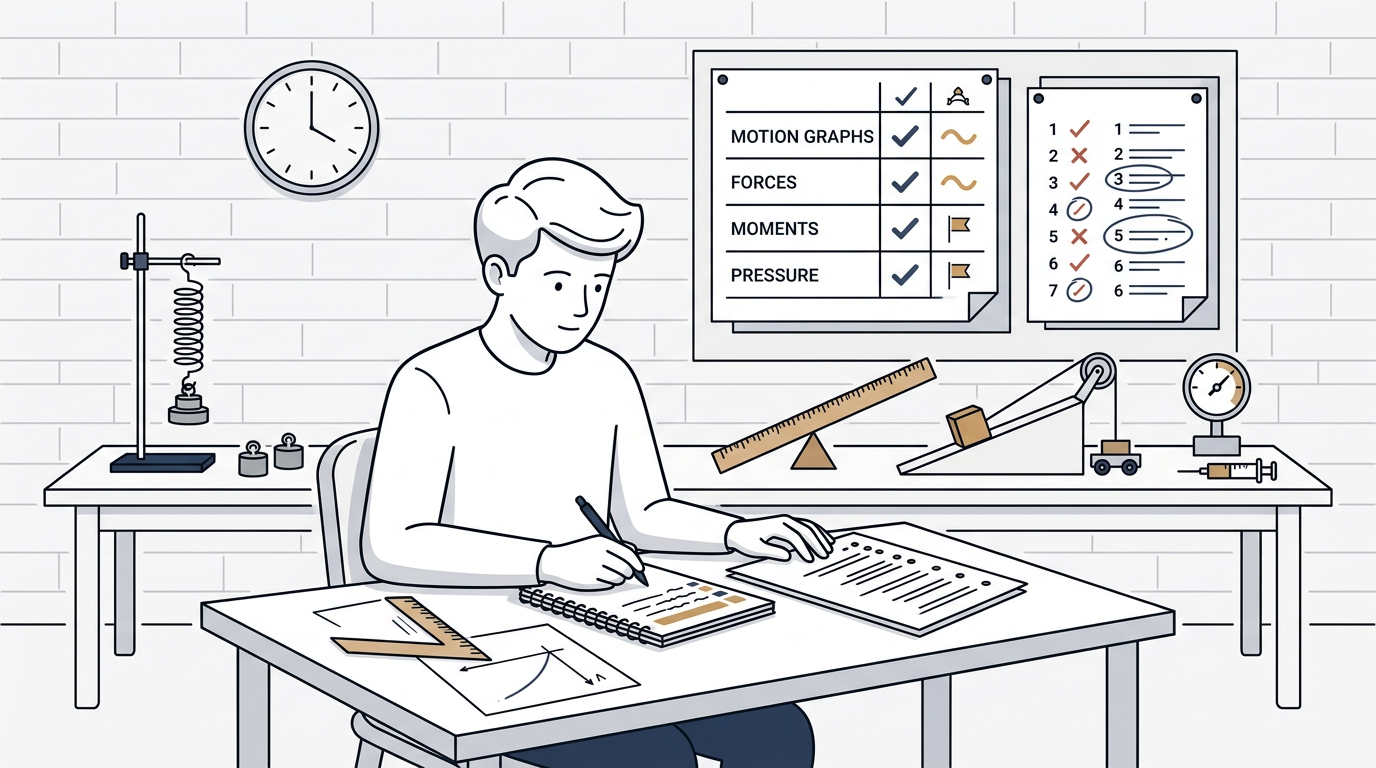
Start with evidence about what you can do independently. The aim is to identify repair priorities, not to produce an impressive first score.
| Day | Main task | Useful output |
|---|---|---|
| 1 | Confirm your papers and exam dates; organise resources; take a timed Paper 2 diagnostic. | A marked paper and initial error log. |
| 2 | Attempt a mixed selection of Paper 4 questions and one Paper 6 question. | Three priority weaknesses. |
| 3 | Review motion and graph interpretation. | Corrected graph questions and explanations. |
| 4 | Review forces, moments and momentum. | Worked solutions with labelled diagrams. |
| 5 | Review energy, work, power and pressure. | Equation recall followed by mixed calculations. |
| 6 | Practise measurement, tables and graph construction. | One carefully checked practical-skills set. |
| 7 | Retest mistakes from Days 1–5; keep the session lighter. | An updated priority list. |
Classify each topic as secure, inconsistent or weak. A topic is not secure merely because you recognise a worked example: test whether you can solve a fresh question without assistance.
Days 8–14: Review thermal physics, waves and circuits
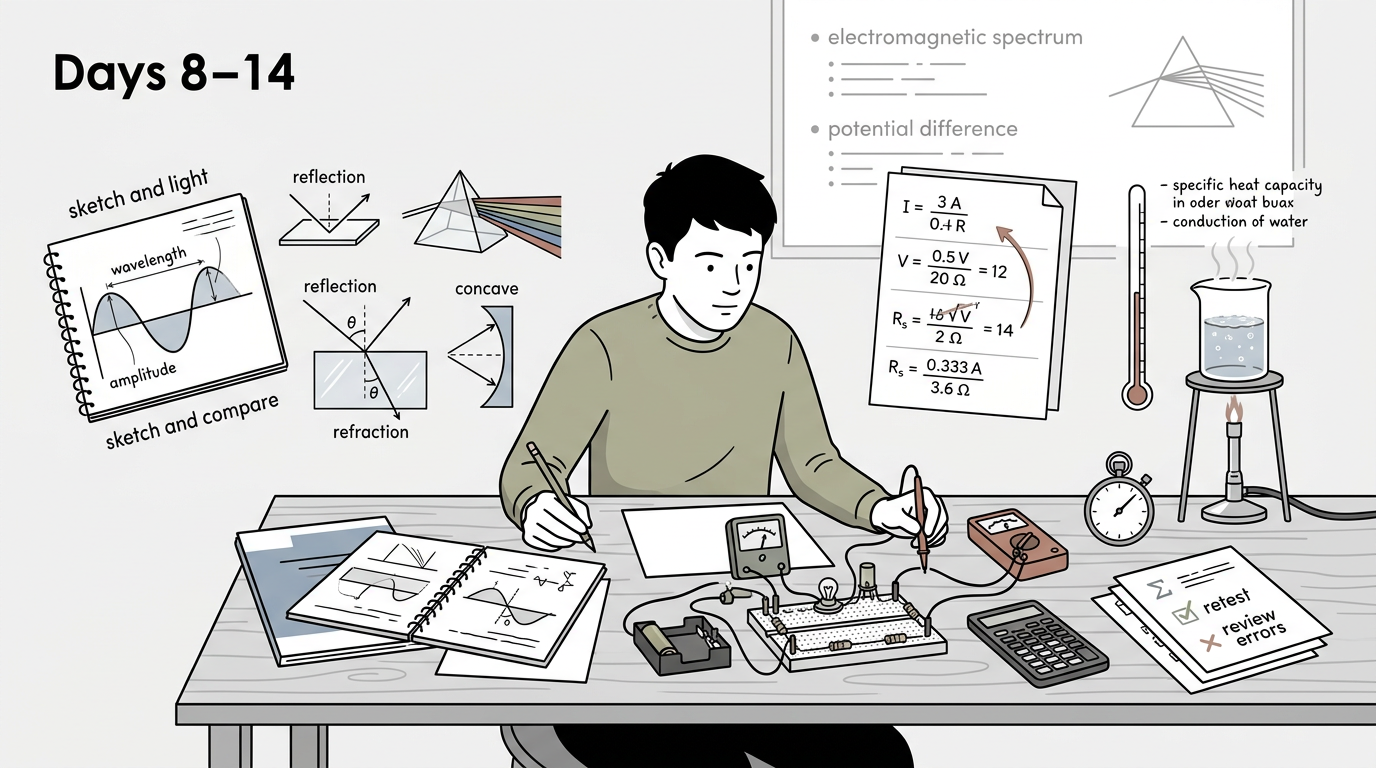
Keep revisiting earlier mistakes while moving through the content. The topic allocations below are study suggestions, not predictions of examination coverage.
| Day | Main task | Useful output |
|---|---|---|
| 8 | Thermal physics: explain processes before attempting calculations. | Brief explanations checked against your notes. |
| 9 | Wave quantities and wave behaviour. | Labelled sketches and a short question set. |
| 10 | Light, sound and electromagnetic waves. | Corrected diagrams and comparison questions. |
| 11 | Charge, current, potential difference and resistance. | A definitions check and circuit calculations. |
| 12 | Circuit reasoning and electrical energy. | Solutions showing each calculation step. |
| 13 | Complete a timed Paper 6. | A marked script and practical-skills priorities. |
| 14 | Complete mixed Paper 2 practice and retest earlier errors. | Evidence of which weaknesses remain. |
Do not wait until the end of the month to ask for help. Take a specific question and your attempted solution to your teacher: “Why is this explanation incomplete?” is easier to resolve than “I do not understand electricity.”
Days 15–23: Complete coverage and practise whole papers
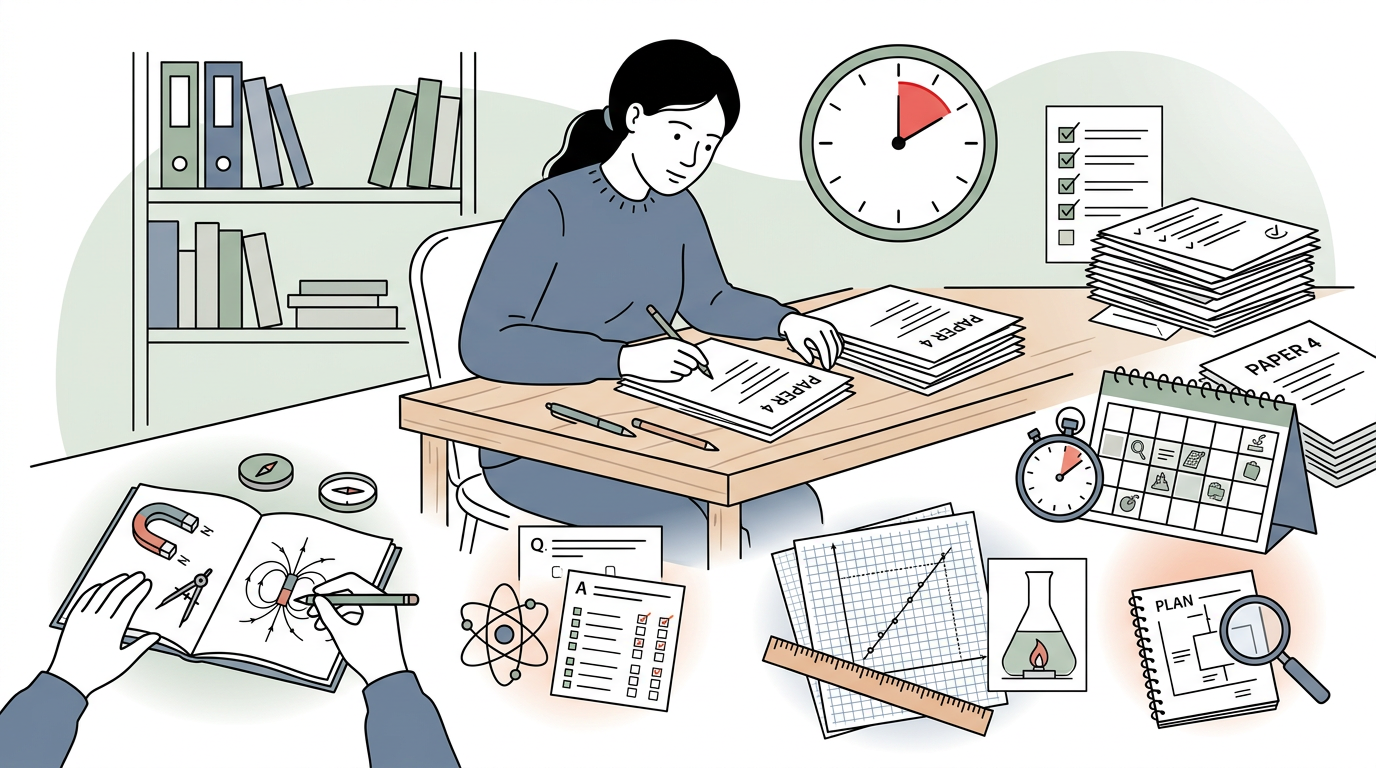
Now shift towards independent performance. Retain short topic-repair sessions wherever the marking reveals a gap.
| Day | Main task | Useful output |
|---|---|---|
| 15 | Magnetism and electromagnetic effects. | Diagrams and explanations from memory. |
| 16 | Nuclear physics. | A focused set of interpretation and calculation questions. |
| 17 | Space physics. | A topic checklist tested through questions. |
| 18 | Complete a timed Paper 4. | An untouched script ready for honest marking. |
| 19 | Mark Paper 4 and repair its two biggest weaknesses. | Rewritten solutions with reasons. |
| 20 | Complete and mark a timed Paper 2. | Review of both wrong and guessed answers. |
| 21 | Practise experimental planning and graph analysis. | One complete plan and one graph task. |
| 22 | Complete another timed Paper 4. | A comparison of pacing and recurring errors. |
| 23 | Mark, retest and catch up. | A short final-week priority list. |
Choose previously unseen papers for timing practice where possible. Repeated papers are useful for retesting, but remembered answers can make them misleading measures of readiness.
How should you use past papers and mark schemes?
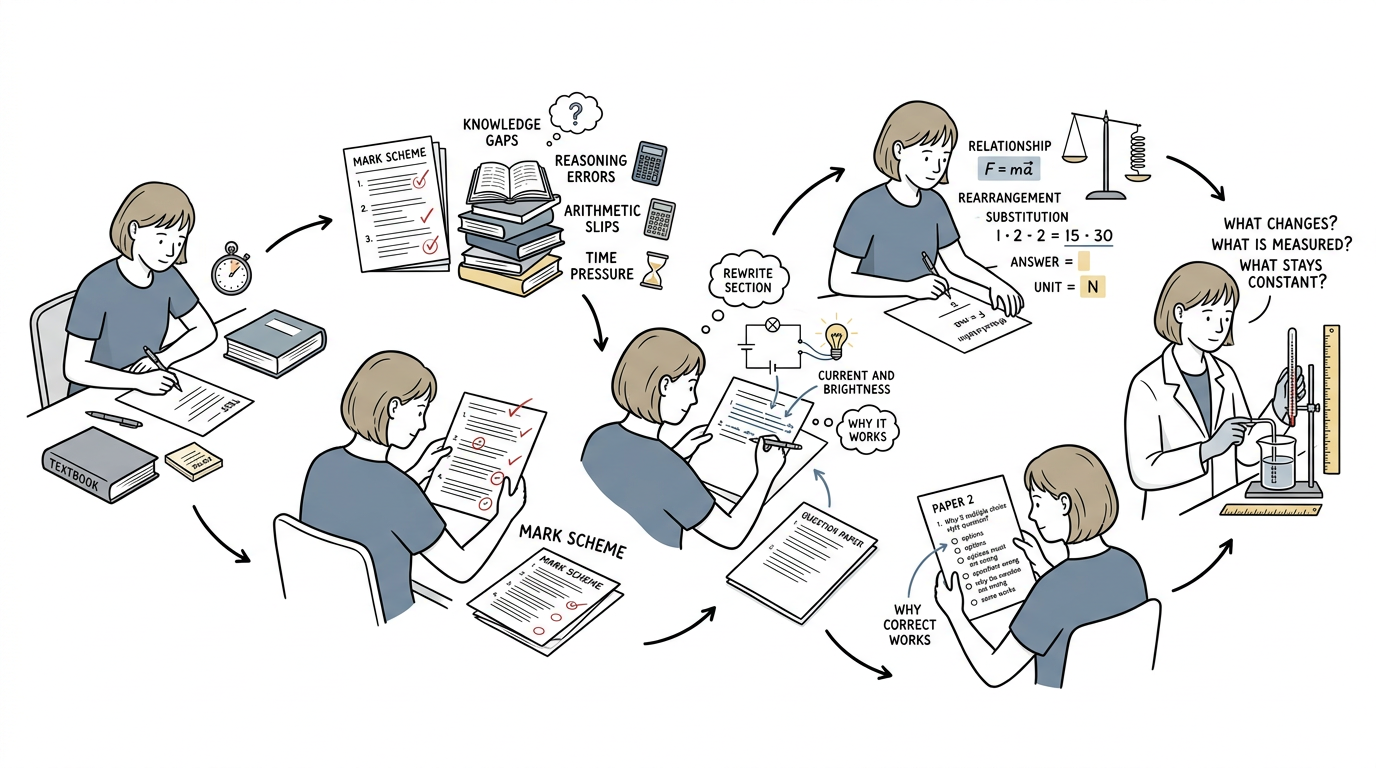
Cambridge provides past-paper resources and warns that older questions may not reflect the current syllabus. Check topic relevance before treating an older paper as a complete rehearsal.
Use this cycle:
- Attempt independently. Keep notes and solutions out of sight.
- Mark with the matching mark scheme. Check the paper reference carefully.
- Diagnose the loss. Separate knowledge gaps, reasoning errors, arithmetic slips and time pressure.
- Repair the method. Rewrite the answer and explain why it works.
- Retest later. Attempt a fresh question on the same skill after a few days.
For Paper 2, review correct guesses as well as wrong answers. Explain why your choice works and why competing options do not.
For Paper 4, use a consistent calculation layout: relationship, rearrangement, substitution, answer and unit. In explanations, connect the physical cause to the resulting effect rather than listing disconnected keywords.
For Paper 6, practise thinking through an actual procedure. Ask what changes, what is measured, what stays constant and how the results would support a conclusion.
Do not chase a fixed paper-count target or assume one practice percentage guarantees a grade. A smaller number of thoroughly corrected papers is a better study target than a large pile of unreviewed scripts.
Which common mistakes should your checks catch?
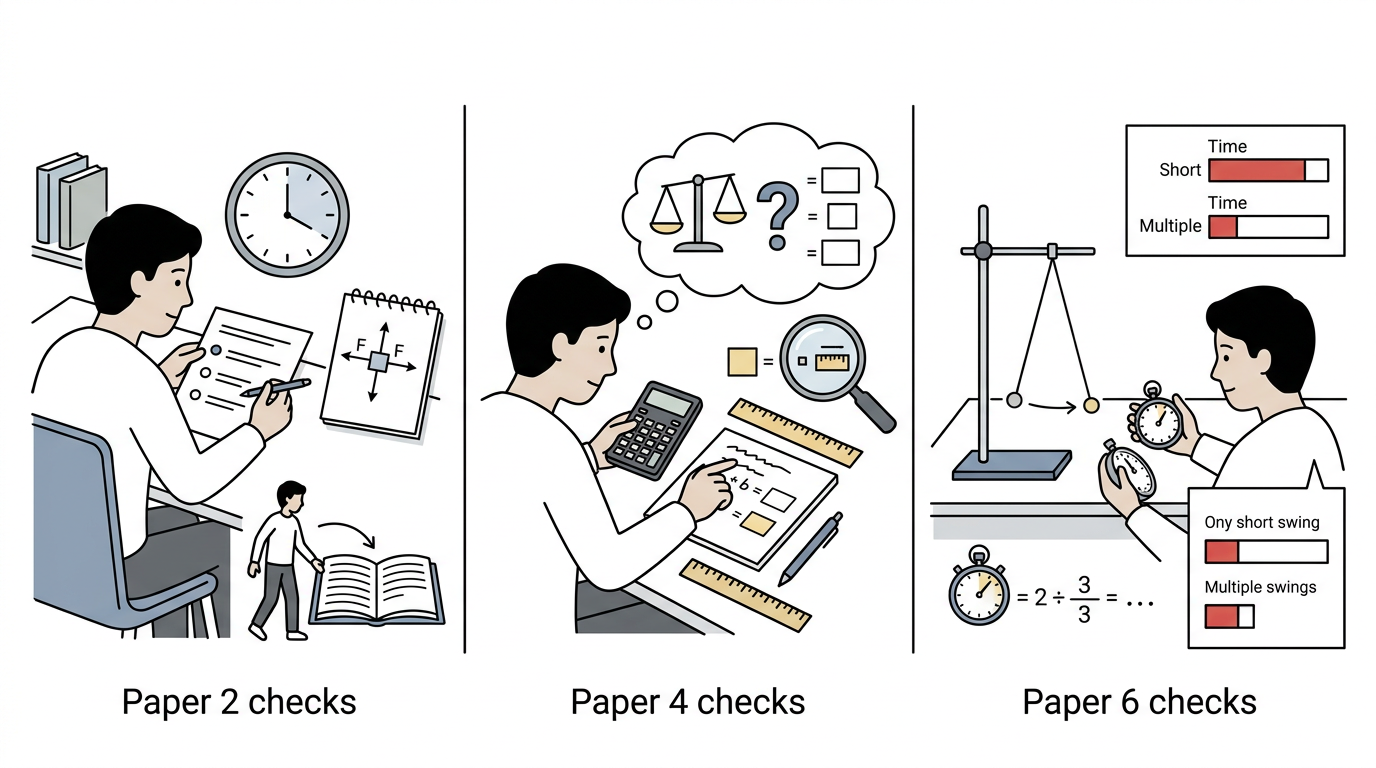
Use the following as a self-checking list, not as a ranking of errors reported by Cambridge examiners.
Paper 2: Rushing the interpretation
Before calculating, identify the quantity requested and inspect the units. Sketch the situation if that makes it clearer. If you become stuck, move on and return rather than letting one question consume disproportionate time.
Paper 4: Incomplete reasoning and hidden arithmetic
Avoid answers such as “it increases” when the question involves several quantities. Name the quantity and explain the relevant relationship.
Keep calculator precision through intermediate steps, then check the final answer for sensible magnitude and units. Visible working also makes it easier to find your own errors during review.
Paper 6: Vague improvements and weak planning
Replace “be more accurate” with a specific action linked to a specific limitation. For example, where appropriate, timing several oscillations and dividing by their number can reduce the relative effect of reaction time compared with timing just one.
For planning practice, use this checklist:
- What variable will you change, and over what range?
- What will you measure, and with which apparatus?
- Which conditions must remain constant?
- Where would repeats help?
- How will you present and analyse the results?
Follow each question’s instructions rather than forcing every experiment into an identical memorised template.
Days 24–30: Consolidate and prepare for the first exam
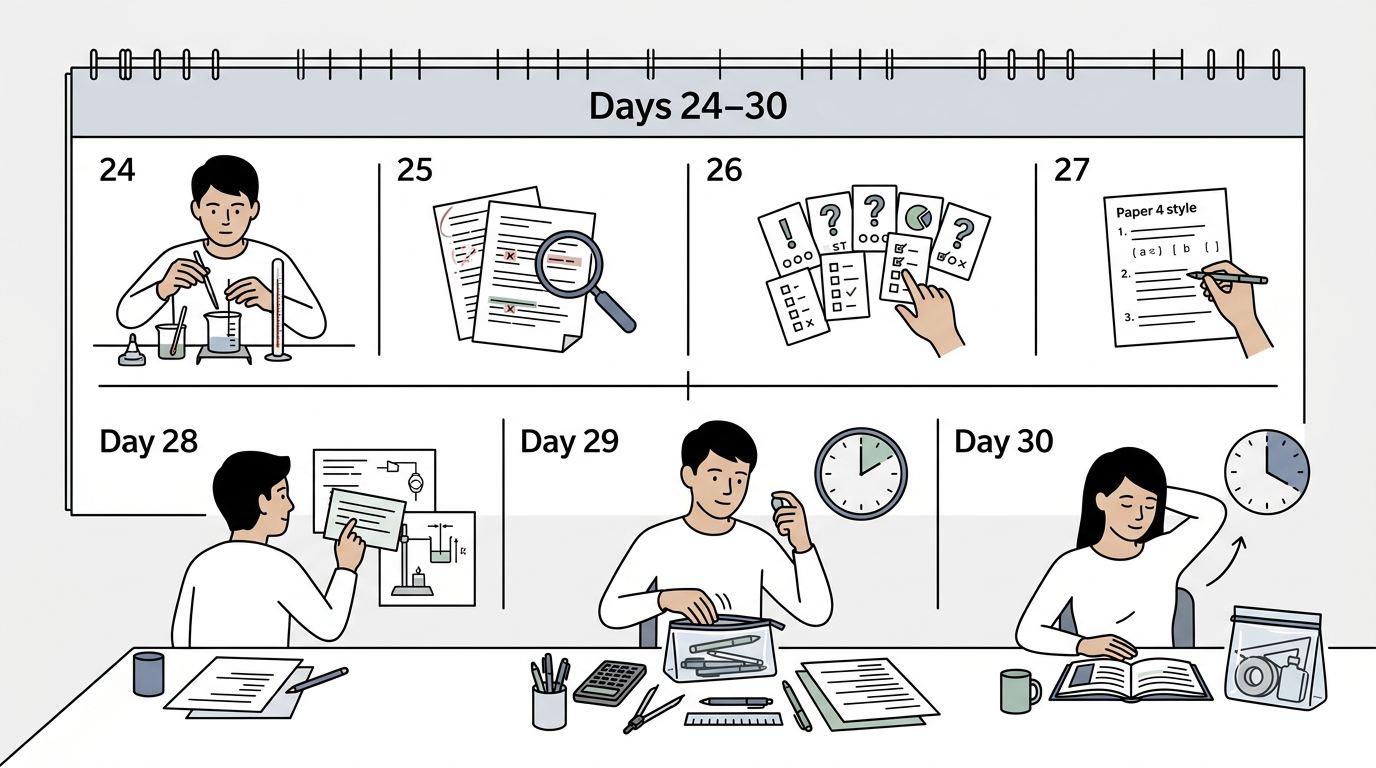
Arrange the final week around your actual paper order. These are revision-day numbers, not October or November calendar dates.
| Day | Recommended focus |
|---|---|
| 24 | Complete a final timed Paper 6, or prioritise the paper coming first. |
| 25 | Mark it and repair the most important remaining errors. |
| 26 | Practise a short mixed Paper 2 set and review uncertain choices. |
| 27 | Answer selected Paper 4 questions targeting recurring weaknesses. |
| 28 | Recall equations, units, definitions and diagrams; check gaps immediately. |
| 29 | Do brief confidence-building practice and confirm practical arrangements. |
| 30 | Keep revision light, prepare approved equipment and stop at a sensible time. |
Avoid starting a large new resource collection. Use your error log to decide what still needs attention.
Confirm reporting times, venue and permitted equipment with your centre. Between examinations, redirect practice towards the next paper rather than repeatedly discussing answers from the paper already completed.
How can parents support the revision plan?
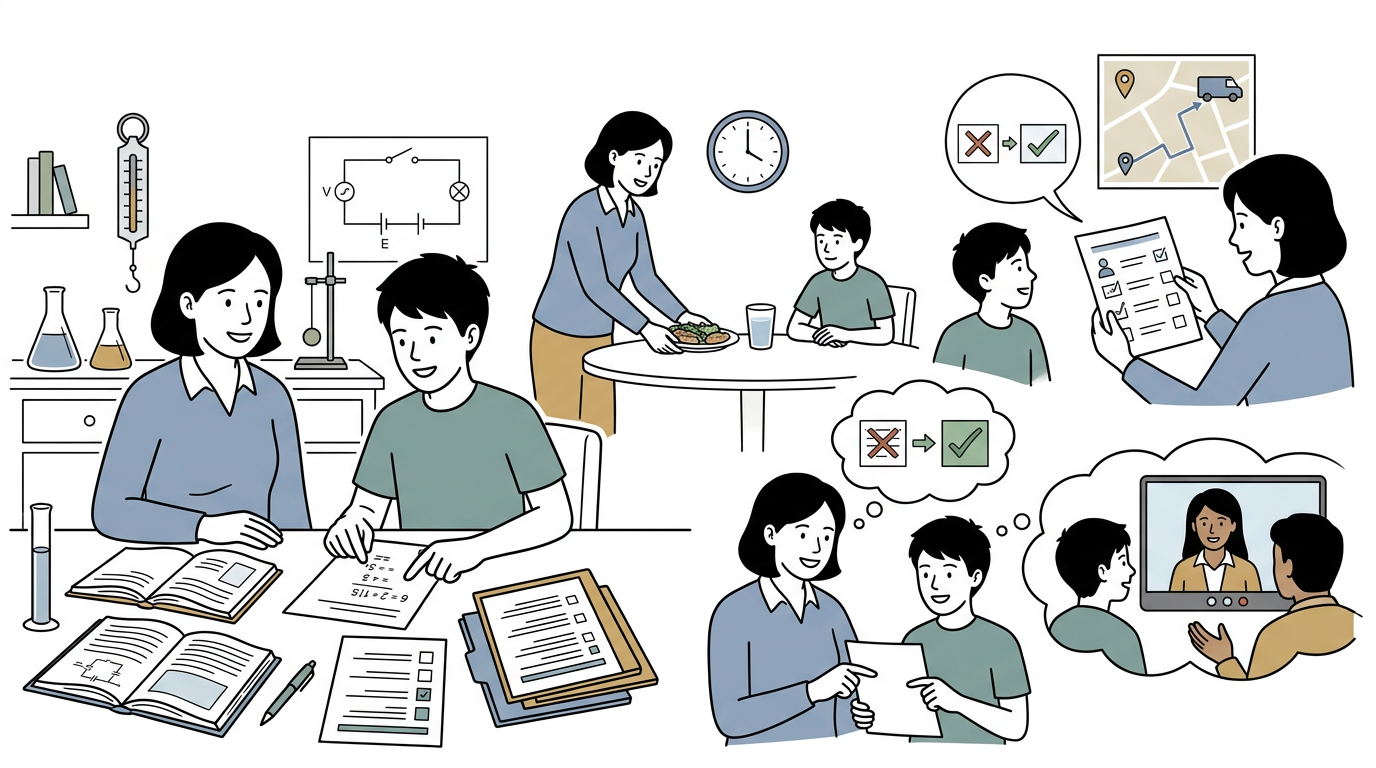
Agree on a realistic study window and protect it from unnecessary interruptions. Ask what support would help before taking control of the timetable.
Useful actions include:
- Helping organise printed questions and matching mark schemes.
- Asking the student to explain one corrected mistake.
- Supporting regular meals, breaks and a consistent bedtime.
- Helping check examination arrangements and transport.
- Praising careful correction and persistence rather than comparing scores with classmates.
A productive weekly question is: “Which mistake can you now avoid that you were making last week?” If the workload becomes unmanageable, help the student discuss priorities with their teacher.
Summary: Recall, practise, correct and retest
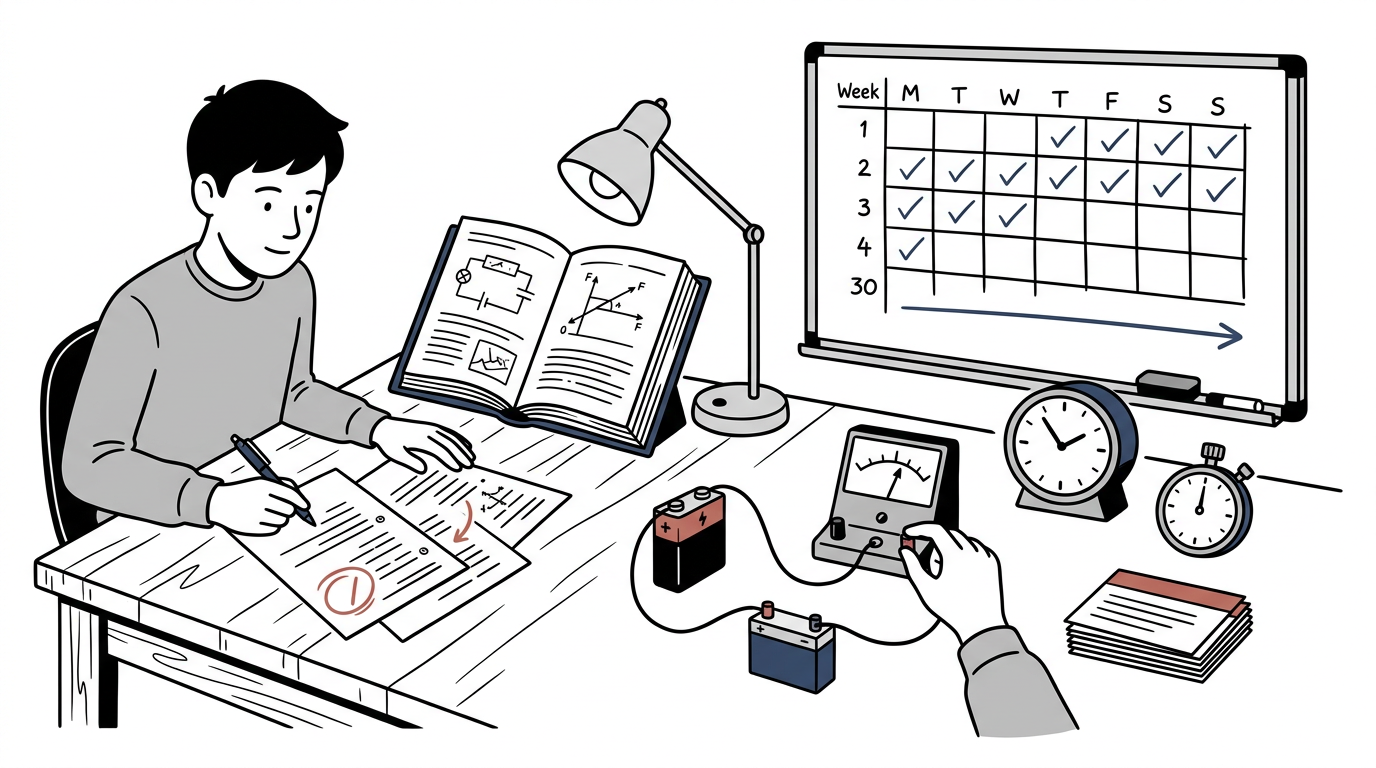
Use the 30 days to move from diagnosis to topic repair, then timed practice and focused consolidation. Keep Papers 2, 4 and 6 in the routine, check older questions against the current syllabus, and make every marked paper lead to a specific improvement. In the final week, prioritise remaining weaknesses, confirmed exam arrangements and a sustainable routine.
Sources
- Cambridge IGCSE 0625 Physics syllabus for examination in 2026, 2027 and 2028 — Verifies syllabus applicability, Extended content, Paper 2/4/6 formats, durations, marks, weightings, topic coverage and experimental-skills assessment. The daily allocations and revision methods are editorial recommendations.
- Cambridge IGCSE Physics (0625): Past papers, examiner reports and specimen exams — Verifies availability of official past-paper resources and the warning that past questions may not reflect the current syllabus.